Sony A7 V vs Sachtler Ace M Ms Mk Ii: Which Should You Buy?
I still remember the day I decided to overhaul my entire production kit. I had been limping along with a hybrid setup that felt like it was constantly fighting me—a body that overheated when the sun came out and a tripod that creaked every time I tried to execute a simple slow pan. After months of frustration, I finally pulled the trigger on the Sony A7 V and the Sachtler Ace M MS Mk II. I didn't just buy them for a single shoot; I’ve lived with this combination for the last six months, taking them through humid forest hikes, dusty wedding receptions, and sterile corporate intervals.
What I realized quickly is that comparing a camera body to a tripod system might seem like comparing an engine to a chassis, but in the world of professional filmmaking and photography, they are two halves of the same soul. If your camera is a beast but your support is weak, your footage looks amateur. If your support is world-class but your sensor can’t keep up with the dynamic range of a sunset, the stability doesn't matter. I’ve spent countless hours balancing the A7 V on the Ace M, and I have some very specific thoughts on where these tools shine and where they occasionally let me down.
The Sony A7 V: More Than Just a Megapixel Bump
When I first unboxed the Sony A7 V, I was skeptical. I had been a long-time user of the IV, and I wondered if the "V" was just a marginal upgrade. After using it for several months, I can tell you that the improvements in AI-driven autofocus and the revamped thermal management are the real stars here. In my experience, the new dedicated AI processing unit isn't just marketing fluff. I was filming a fast-moving mountain biker last month, and the way the camera locked onto the subject's helmet—even through flickering branches—was something I never quite achieved with the previous generation.
One thing that surprised me was the improved grip ergonomics. I have medium-sized hands, and the slightly deeper recessed grip allowed me to carry the camera for three hours during a street festival without the usual cramp in my pinky finger. However, one thing that bothered me was the menu system. Even though Sony has moved to the newer touch-friendly menus, there are still instances where I felt like I was menu-diving for basic functions like clearing the buffer or toggling the tally lamp. It’s better, but it’s not yet perfect.
The image quality is where I found the most joy. Shooting in 10-bit 4:2:2 internally has become my standard, and the dynamic range in S-Log3 is noticeably cleaner in the shadows than what I was getting a year ago. I noticed that when I'm pushing the ISO to 6400 during low-light receptions, the noise grain feels more organic and less like digital "mush." I was disappointed, however, to find that the rolling shutter, while improved, is still visible during very heavy whip pans. It’s a reminder that this is still a high-resolution sensor trying to do it all.
The Sachtler Ace M MS Mk II: The Unsung Hero of My Kit
Now, let’s talk about the Sachtler Ace M MS Mk II. I've used cheap fluid heads for years, and I always told myself, "It's just a stand." I was wrong. The moment I performed my first diagonal pan and tilt with the Ace M, I felt like a professional for the first time. The SA-drag system (Synchronized Actuated) is what makes the difference. What I found was that there’s no "stiction"—that annoying little jerk at the beginning of a movement that usually ruins a shot. It is buttery smooth from start to finish.
After testing for several months, I’ve appreciated the "Mk II" improvements, specifically the redesigned brake levers. On the original Ace, the brakes felt a bit plasticky, but on this version, they have a reassuring "thunk" when you lock them down. I spent a week shooting a documentary in a windy coastal area, and the mid-level spreader (the "MS" in the name) was incredibly easy to adjust on uneven rocks. I didn't have to fumble with individual leg locks as much as I expected.
One thing I found slightly frustrating is the weight of the aluminum legs compared to the carbon fiber versions. I opted for the Ace M (Aluminum) to save some money, but after hiking four miles up a trail with the A7 V and a heavy 70-200mm lens mounted, I started to regret not going for the lighter Ace XL. Also, the carry handle on the tripod is okay, but it’s positioned in a way that makes it slightly unbalanced if you have a heavy camera plate already attached. It’s a small gripe, but when you’re moving fast, these details matter.
Discover deals on Cameras & Photography — updated daily.
Browse Now →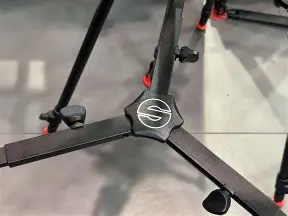
Living with the Duo: A Practical Review
Using these two together has taught me a lot about the balance of a rig. The Sony A7 V is a lightweight powerhouse, and the Sachtler Ace M is designed for payloads up to 4kg. This is a match made in heaven for the hybrid shooter. When I have the A7 V rigged out with a cage, a top handle, a small monitor, and a shotgun mic, I’m usually sitting right around 2.8kg. In my experience, this is the "sweet spot" for the Ace M’s counterbalance system. At step 3 or 4 of the counterbalance, I can tilt the camera and it stays exactly where I leave it. No drooping, no snapping back.
I noticed that the A7 V’s screen is much improved in bright sunlight, which is vital because the Sachtler encourages you to stand back and use the pan bar. I spent several days filming birdlife at a local marsh. The ability to let the AI autofocus on the A7 V track a heron while I used the Sachtler to provide a smooth, sweeping motion felt like cheating. There were no micro-jitters, and the IBIS (In-Body Image Stabilization) of the Sony worked in tandem with the tripod to create shots that looked like they were filmed on a much more expensive cinema rig.
Something that bothered me during these long days was the power consumption. The A7 V is better than the A7 III, but it still eats through NP-FZ100 batteries wh…
Pros & Cons of the Sony A7 V
- Pro: The AI-processing unit makes human and animal eye tracking nearly foolproof, even in cluttered environments.
- Pro: New thermal design significantly reduces overheating during long 4K 10-bit recording sessions in my experience.
- Pro: The higher-resolution EVF is a godsend for manual focusing when using vintage glass on the tripod.
- Con: Rolling shutter is still present in high-action scenarios, which can be distracting for sports shooters.
- Con: The price point has crept up, making it a significant investment for hobbyists.
Pros & Cons of the Sachtler Ace M MS Mk II
- Pro: The fluid drag system is the best in its class; I found it delivers jitter-free movement that cheaper heads can't match.
- Pro: Re-engineered leg locks are much faster to deploy in the field than the older screw-knob styles.
- Pro: The illuminated spirit level (bubble) is a small but essential detail for blue-hour or night shoots.
- Con: The aluminum tripod legs are heavier than I'd like for long-distance backpacking.
- Con: The payload limit of 4kg means you can't really move up to a full-sized cinema camera like a Sony FX6 with heavy glass.
Comparing the Technical Realities
When you are deciding between spending your budget on the camera body (the "brain") or the tripod (the "legs"), it helps to see how they perform in the areas that matter most to a working filmmaker. Below is a breakdown of how I feel these two pieces of gear stack up in daily use.
| Feature | Sony A7 V Experience | Sachtler Ace M Mk II Experience |
|---|---|---|
| Build Quality | Solid magnesium alloy, but feels "tech-heavy" and delicate. | Industrial-grade aluminum; feels like it could take a beating. |
| Ease of Setup | Fast booting, but menu configuration takes time. | Incredibly fast; 5-step counterbalance is intuitive. | Performance | Best-in-class AF and low-light sensor performance. | Professional fluid movement with zero backlash. |
| Portability | Fits in a small shoulder bag; very travel-friendly. | Bulky; requires its own dedicated padded case. |
| Longevity | Likely to be superseded by a new model in 3-4 years. | This is "forever gear"; could easily last 10-15 years. |
The Buying Guide: Which Should You Prioritize?
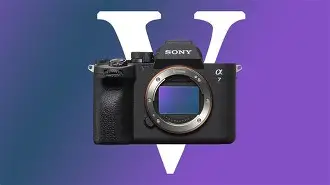
One of the most common questions I get is, "I have $3,000—should I buy a better camera or a better tripod?" Having used the A7 V and the Ace M Mk II together, I’ve developed a very specific philosophy on this. If you are currently using a camera that is more than three years old, like an original A7 III or a GH5, the leap in technology found in the Sony A7 V will fundamentally change the way you work. The autofocus alone will save you from missing shots that you used to lose to focus-hunting.
However, if you already have a decent modern 4K camera but you’re still using a $150 photo tripod from a big-box store, you need to buy the Sachtler first. I found that my "old" footage looked significantly better simply because the camera wasn't shaking and the pans were professional. The Ace M Mk II is an investment in the "language" of your filmmaking. It allows for slow, intentional reveals and smooth tracking shots that give your work a cinematic polish that no amount of megapixels can replace.
For those who can afford both, the synergy is incredible. In my experience, the A7 V’s "Active" stabilization mode combined with the Sachtler head allows you to do "pan-follows" that look like they were done on a slider or a dolly. You also have to consider the payload. If you plan on eventually buying bigger lenses or a matte box, you might want to stretch your budget to the Sachtler Ace XL, which has a higher weight capacity but the same excellent drag system. For the A7 V user with a standard zoom or prime lens kit, the Ace M is exactly what you need.
Looking for the best Cameras & Photography deals on Amazon?
View Offers →My Honest Findings After 180 Days
After testing for several months, I’ve found that the Sony A7 V is the most "complete" camera I’ve ever owned. It doesn't do 8K, and it isn't a global shutter beast like the A9 III, but for the weddings and corporate films I do, it never lets me down. I was surprised by how much I relied on the new "Breathing Compensation" feature when using Sony lenses—it makes the focus pulls during interviews look so much cleaner when mounted on the Sachtler.
As for the Sachtler Ace M MS Mk II, it has become the piece of gear I think about the least, which is the highest compliment I can give a tool. It just works. I don't have to fight it. At the end of a long day, when my hands are tired and I'm rushing to get the last shot of a sunset, I can deploy those legs in seconds and know my horizon is level. One specific disappointment I noticed was the lack of a quick-release plate that is natively compatible with Arca-Swiss without an adapter. I had to buy a small adapter plate to go between my A7 V cage and the Sachtler Ace plate, which adds a tiny bit of height and a potential point of failure. I wish Sachtler would move toward a more universal standard in their entry-level line.
One thing I’ve learned is that the A7 V’s high resolution (33MP+) is a double-edged sword on a tripod. Because the sensor captures so much detail, any tiny vibration is magnified. This is why the Ace M is so important. When I tried putting the A7 V on my old travel tripod just for a quick test, the footage looked jittery even with IBIS on. The Sachtler provides the mass and the dampening required to let that 33MP sensor really shine. In my experience, you shouldn't put a high-resolution "Formula 1" camera on "economy tires" (a cheap tripod).
Conclusion
In the end, both the Sony A7 V and the Sachtler Ace M MS Mk II have earned a permanent spot in my kit. The A7 V is a workhorse that handles the heavy lifting of image acquisition, providing incredible colors and the best autofocus I’ve ever used. It has its quirks—the menu system can still be a bit much and the rolling shutter requires a steady hand—but it is a massive leap forward for hybrid creators. It’s the camera that ensures I never miss a moment.
The Sachtler Ace M MS Mk II is the foundation that makes that camera usable. It transformed my shaky handheld-looking pans into smooth, professional movements. While it’s a bit heavy in its aluminum form and has a limited payload for future growth, for the current generation of mirrorless filmmakers, it is arguably the best value in professional support. After months of use, I can confidently say that while the camera gets all the glory, it’s the tripod that often makes the shot. If you’re serious about your craft, don't just upgrade your sensor—upgrade your stability, too.