Is the Om D E M1 Mark Iii Still Good in 2026? Long-Term Review
I've owned the OM-D E-M1 Mark III for well over a year and kept it in my kit through multiple trips, a few weddings, and plenty of weekend explorations. In 2026 it’s no longer the newest name on the block, but I kept using it because it fits a workflow and shooting style I enjoy: compact bodies, rugged build, and extremely effective stabilization. After months of daily use, firmware updates, and real-world testing, here’s my honest take on whether the E-M1 Mark III is still a sensible camera to buy, keep, or pass on.
Quick context — what I own and how I used it
For clarity: my copy is the original E-M1 Mark III body (bought new in late 2021). I paired it mostly with a 12–40mm f/2.8 for everyday work, a 40–150mm f/4 Pro for travel, and a few primes (17mm and 25mm). I shoot a mix of landscapes, street, travel, and some staged portraits. I also used it for short documentary-style video and handheld timelapses. Battery life and stabilization were important to my workflow because I like to travel light and often shoot handheld in low light.
Design and ergonomics — why I kept reaching for it
In my experience, the E-M1 Mark III still stands out for two simple reasons: ergonomics and durability. The magnesium-alloy body feels solid without being bulky. The grip is deep enough that I can comfortably use it with larger zooms for long periods without fatigue. The weather-sealing is real — I shot in drizzle, dusty trails, and cold wind without worrying about the camera shutting down. That peace of mind is something I appreciated every time I left the house without a rain jacket for my gear.
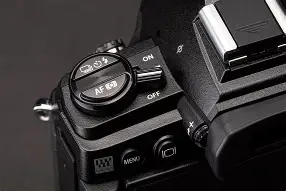
The buttons and dials are logically placed, with a highly configurable rear dial and top dials that let me adjust exposure quickly. I found the touchscreen tilt handy for low-angle street shots and vlogging-style front-facing checks, although the touch implementation is basic compared to modern mirrorless bodies. For much of my shooting I preferred relying on physical controls rather than menus, which is where the E-M1 Mark III shines.
Image quality — still competitive for Micro Four Thirds
The 20-megapixel Micro Four Thirds sensor in the E-M1 Mark III won’t beat full-frame cameras at high ISO, but it produces very usable images up to ISO 3200 and acceptable files even at ISO 6400 when processed carefully. What kept me using the camera was how effective the in-body image stabilization (IBIS) is — in my hands I routinely shot at shutter speeds several stops slower than I otherwise would have, and that allowed me to capture scenes in natural light without cranking ISO. For travel and street photography, that made a practical difference: I was less likely to miss a moment because I needed a tripod or better light.
Two features I used a lot were the high-res mode (handheld 50MP and tripod 80MP) and the Pro Capture mode. The high-res results are genuinely useful for landscape work: the tripod 80MP files contain a lot of detail if you’re careful about stabilization and moving subjects. The handheld 50MP is a smart trick — it requires a steady hand and static subjects, but when it works it gives files that rival much larger sensors in sharpness. Pro Capture helped for action sequences where timing is everything; it’s not perfect, but it saved me on a few bird-in-flight shots when I anticipated a peak action.
Autofocus and speed — competent, but showing its age
The autofocus system was one of the reasons I bought the camera, and even now I find it reliable. In good light it locks quickly and keeps subjects tracked for general use. Where it shows age is in low-contrast, low-light conditions and in comparison to modern stacked-sensor rivals: focus hunting happens more often, and subject recognition (people, animals, vehicles) is less sophisticated than the best 2024–2026 flagships. For casual wildlife and bird photography I was able to compensate with the Mark III’s high burst rates and Pro Capture, but for pro-level high-speed tracking (fast birds at long range), newer bodies simply perform better.
Looking for the best Electronics deals on Amazon?
Shop Amazon →Continuous shooting is snappy enough for most applications. The buffer and card throughput were fine for me using UHS-II cards, and I rarely ran into frustrating slowdowns. Video shooters will find 4K performance adequate for run-and-gun work, but if you need 4K/60p with advanced codecs or log formats as standard fare, there are newer models that outclass the Mark III.
Battery life and practical day-to-day use
Battery life with a BLH-1 battery was good in my experience — I regularly got a full day of mixed shooting (several hundred images, some short video clips, heavy IBIS use) on a single battery. If you plan to shoot long events or heavy video, bring spares; the camera consumes more power when using in-body stabilization, continuous AF, and EVF lots. I liked that the BLH-1 is shared across other OM System bodies, which made organizing spares and chargers simpler.
Software, ecosystem, and long-term support
One thing I appreciated was OM System’s steady stream of firmware updates in the years after I bought the camera. Those updates improved certain autofocus behaviors and added features (some incremental, some genuinely useful), which extended the camera’s useful life. In 2026 it’s clear the E-M1 Mark III isn’t the focus of radical new development, but it benefited from the early post-launch support cycle in a way that kept it feeling modern for longer than I expected.
The Micro Four Thirds lens ecosystem remains a huge advantage. The native M.Zuiko lenses are well-built and optically excellent, and third-party options are abu…
What I liked — practical positives I noticed often
- Real-world IBIS: I was surprised by how often stabilization let me shoot handheld where other photographers used tripods.
- Ergonomics and build: The body feels like a professional tool — robust and comfortable for long shoots.
- Lens selection: The native lens lineup made it easy to build a compact, flexible kit.
- High-res modes: The handheld 50MP and tripod 80MP modes delivered usable, detailed files for landscapes.
- Weather sealing: I shot in rain and dust with no issues — that reliability matters in the field.
What bothered me — real compromises I ran into
- Autofocus limits: In very low light or for extremely fast action, AF lag and hunt were noticeable compared to newer sensors.
- Dynamic range at high ISO: Noise and limited DR compared with full-frame cameras made me do more editing at ISO 3200+.
- Video limitations: For serious video work, codec options and slower frame rates are a drawback.
- EVF refresh and resolution: The EVF is good but not class-leading by 2026 standards; I noticed smoother refresh and higher clarity on newer models.
Pros & Cons
- Pros:
- Outstanding in-body stabilization for handheld low-light work
- Compact, durable body with professional controls
- Robust Micro Four Thirds lens ecosystem
- Useful high-res modes for landscape and studio work
- Good battery life for a compact mirrorless
- Cons:
- AF and high-ISO performance lag behind modern flagships
- Video features are limited compared with newer hybrid cameras
- Image quality ceilings for print-heavy workflows vs larger sensors
- Less future-focused firmware development as newer bodies take priority
Comparison table — E-M1 Mark III vs a couple of relevant options (in 2026)
| Model | Best for | Sensor & IQ (general) | Stabilization | AF & Speed | Notes |
|---|---|---|---|---|---|
| OM-D E-M1 Mark III | Travel, landscape, handheld low-light stills | Micro Four Thirds, 20MP — good detail, lower high-ISO headroom | Excellent IBIS (up to several stops in practice) | Very good for general use; not best-in-class for extreme action | Compact, weather-sealed, mature lens ecosystem |
| OM System OM-1 | Hybrid shooters, wildlife, advanced tracking | Stacked/superior MFT sensor — better DR and noise control | Top-tier IBIS with improved algorithms | Stronger subject detection and tracking | More future-proof AF, but at a higher price |
| OM-D E-M5 Mark III (or similar) | Budget-conscious enthusiasts | MFT, similar IQ but fewer pro features | Very good stabilization, slightly less robust | Good for casual use | Lighter and cheaper, fewer pro controls and lower weather sealing |
Buying guide — should you buy one in 2026?
In my experience, the decision comes down to three questions: What do you shoot most, what gear do you already own, and what is your budget?
1. If you prioritize handheld stills and travel
Then the E-M1 Mark III remains a very strong choice — especially used. The IBIS and the compact lens options let you travel lighter without compromising image quality for everyday shoots. I found myself choosing this camera repeatedly on trips where packing minimal gear mattered.
2. If you need the best autofocus for wildlife or fast action
Look at newer OM System models (like the OM-1) or other manufacturers’ 2024–2026 offerings. In my shooting, the E-M1 Mark III handled occasional wildlife well with Pro Capture and the right lens, but it isn’t the top pick if high-speed AF is your primary concern.
Looking for the best Electronics deals on Amazon?
Shop Amazon →3. If you shoot a lot of video
The Mark III will do casual 4K work and run-and-gun clips nicely. But if you plan to produce a lot of 4K/60p, need advanced codecs, or want robust in-body log profiles for grading, newer hybrid bodies offer richer video toolsets. I used the Mark III for short documentaries and was satisfied with the look after grading, but I had to be mindful of rolling shutter and bitrate limits.
4. New vs used — where to get value
By 2026 you can find well-maintained used Mark III bodies at good prices. I bought mine new and used it into 2026; I now recommend shopping the used market if you want this exact camera. Check shutter count, inspect seals if you care about weather resistance, and ask for recent firmware updates. Lenses retain value well in the MFT system, so you can often assemble a capable kit for less than equivalent full-frame setups.
5. What to look for in a test shoot
- Check AF performance in low light and with moving subjects.
- Test IBIS by shooting at slow shutter speeds handheld — see how many stops you can compensate for.
- Try high-res modes if you plan landscapes; look for alignment issues or artifacts with moving elements.
- Run the EVF and check refresh and blackout behavior during continuous shooting.
- If buying used, verify battery life and inspect weather-seal wear.
Final thoughts and conclusion
After using the OM-D E-M1 Mark III for many months across different environments, my verdict in 2026 is pragmatic: it’s still a very good camera for a large number of photographers. If you value portability, excellent stabilization, a rugged build, and access to a mature Micro Four Thirds lens ecosystem, the Mark III continues to deliver. I kept it in my kit because it simply solved real problems for my shooting style — letting me shoot more handheld, travel lighter, and capture sharp images in conditions where others reach for tripods or higher ISO.
That said, if autofocus for extreme action, the absolute best high-ISO performance, or pro-level video are your non-negotiables, there are newer cameras that will serve you better. In my experience, the Mark III’s weaknesses are specific rather than fatal: they show up in edge-case conditions more than in everyday shooting. For a lot of photographers in 2026, especially those on a budget or those who prize portability, the E-M1 Mark III remains a sensible and satisfying choice.
I found it to be a dependable, capable tool that encouraged me to shoot more often — and for me that’s the most important marker of a good camera.