I Tested the Yale Smart Lock With Matter for a Month: Here is My Verdict
Category: Electronics
Introduction
After a month of daily use, the Yale Smart Lock With Matter earns attention not just as a piece of connected hardware but as a case study in whether Matter—the new interoperability standard—actually improves the smart-lock experience for typical buyers. This article examines the lock from setup through daily reliability, focusing on real-world scenarios that matter to homeowners, renters, and property managers: compatibility with existing smart home ecosystems, speed and reliability of local control, battery life, security behavior, and the everyday quirks that influence whether someone will recommend or return a smart lock.
What Was Tested
The review covers one month of hands-on use in a suburban single-family home: morning and evening door cycles, guest access, smartphone and voice control, integration with multiple hubs/controllers, and several simulated failure scenarios (battery low, temporary network outage, and firmware update). The unit tested was the Yale Smart Lock With Matter (hereafter “the Yale Matter lock”), used as a retrofit on a standard single-cylinder deadbolt. No proprietary gateways were used; Matter connectivity was exercised via a Matter-capable smart home controller and native voice assistants that support Matter.
Initial Setup and Installation
Installation in the tested home took roughly 25–40 minutes for someone comfortable with basic tools. The Yale Matter lock follows the general retrofit pattern: remove the existing interior thumbturn hardware, attach the mounting plate, and connect the lock’s interior module. Clear printed instructions and an accompanying app walkthrough reduced typical confusion points—aligning the tailpiece, positioning the calibration sensor, and registering the lock in the app.
Two setup pathways were offered: using the Yale app and adding the device through a Matter controller (via QR code or manual code). Going the Matter route allowed immediate discovery by other Matter-compliant controllers in the home without installing a secondary bridge. That proved convenient for households already invested in platforms moving quickly to Matter support.
Daily Use: Reliability, Responsiveness, and UX
Over the month the Yale Matter lock handled more than a thousand lock/unlock cycles through a variety of inputs: physical key, touchscreen/push, smartphone app, voice commands, and home-automation triggers. Key observations:
- Responsiveness: Local unlocks (phone on the same Wi‑Fi or via a Matter controller on local network) were consistently fast—typically under a second from command to action when the Matter controller was local. Voice-initiated locks through a cloud-connected assistant were occasionally slower, adding 1–3 seconds of lag.
- Local control stability: During two short internet outages the lock continued to operate with local commands issued through the Matter controller and physical interaction—an important real-world advantage compared with cloud-only locks that can sometimes lose functionality during connectivity loss.
- App experience: The Yale app provides straightforward access to lock state, activity logs, and guest codes. When the lock was managed primarily via a Matter controller and third-party apps, the Yale app remained useful for firmware updates and edge-case troubleshooting.
- Auto-lock and schedules: These features worked reliably. Auto-lock delay and geofencing-based automations were solid when configured via a local Matter controller; geofencing that relies on cloud services was less consistent across the month.
Matter in Practice: What Changed
Matter’s core promise is cross-vendor interoperability and local control. In this review the practical benefits observed were:
- Simpler ecosystem management: The lock appeared in the Matter controller alongside lights, thermostats, and other devices without requiring a separate vendor bridge.
- Improved local automation: Automations defined in a local Matter controller executed more reliably and faster than equivalent cloud-driven routines.
- Future-proofing: With Matter support, the lock is more likely to remain compatible as the user mixes and matches devices from different brands.
Limitations remain, however. Some advanced Yale-specific features—detailed activity reports, nuanced access logs, and certain proprietary integrations—still required the Yale app or cloud services. Matter covers common control and status behaviors, but manufacturer apps retain added services beyond the Matter baseline.
Compatibility and Ecosystem
Buyers typically care whether a smart lock will work with their current smart home. The Yale Matter lock interoperated with the following types of setups in testing:
Looking for the best Electronics deals on Amazon?
Shop Amazon →- Matter-capable smart home hubs and controllers that had been updated for Matter support.
- Voice assistants that support Matter directly or via a local controller.
- Existing smart home devices via automations in the Matter controller (e.g., lock the door when the last person leaves and the thermostat switches to away).
For households using older hubs that rely on Z-Wave or Zigbee, the Yale Matter lock may coexist but not benefit from Matter’s simplifications unless the hub is Matter-enabled. Buyers who depend on specific legacy integrations should verify whether those features are available through Matter or require the Yale app/bridge.
Security and Privacy
Security is the top concern for anyone installing a smart lock. The Yale Matter lock uses standard smart-lock protections: unique access codes, activity logs, and encrypted communications when the product’s cloud services are used. Matter’s focus on local control can reduce cloud exposure for everyday lock/unlock commands, which is a privacy plus.
Two practical notes from testing:
- The lock’s administrative features require account setup in the Yale app for advanced management (guest code creation, timed codes). That means some metadata and access logs may be stored in cloud services if a user chooses those features.
- Physical security still depends on door hardware and installation quality. The electronic lock replaces the thumbturn and communication layer but does not change the physical strength of the door, deadbolt, or strike plate—buyers should consider upgrading those components for best protection.
Battery Life and Maintenance
Battery life is a frequent purchase-decider. During the month of testing the Yale Matter lock ran on standard AA batteries and used around 10–15% of battery capacity per week with heavy usage, predicting a multi-month lifespan under typical mixed-use patterns. That aligns with buyer expectations for retrofit smart locks.
Yale’s low-battery notifications in the app and local behaviors (e.g., reserve power mode when battery very low) functioned as expected. Replacing the batteries…
Firmware Updates and Longevity
Firmware updates are essential for security and compatibility. During the test period Yale pushed one firmware revision and the update applied successfully through the Yale app. Matter allows the lock to be managed by Matter controllers for devices that support OTA updates through the network, but in some cases the Yale app remains the primary path for manufacturer firmware updates. Buyers should expect to retain the manufacturer app for occasional maintenance tasks.
Real-World Use Cases
Several buyer scenarios illustrate where the Yale Matter lock shines or falls short:
- Family households: Quick, reliable local control and guest codes for relatives make day-to-day life easier. Auto-lock and geofencing help with safety and convenience during school drop-offs and evening routines.
- Airbnb/short-term rentals: Timed access codes and activity logs are vital. The Yale app’s management features are helpful, but hosts relying on third-party property management platforms should confirm integration paths.
- Property managers and multi-unit buildings: Scalability depends on management tools. Matter makes interoperability simpler, but enterprise-grade lock fleets often require centralized management platforms beyond consumer apps.
- Accessibility-focused households: Remote unlocking and voice control reduce mobility friction. Local control through Matter minimizes the risk of losing basic functionality during cloud outages.
Pros & Cons
- Pros
- Fast, reliable local control when paired with a Matter-capable controller
- Simplified ecosystem integration—no separate bridge for Matter-compatible setups
- Robust daily features: auto-lock, schedules, and guest codes
- Good battery life and clear low-battery warnings
- Continues functioning with local commands during internet outages
- Cons
- Some advanced features still require the Yale app or cloud services
- Physical security depends on door hardware—installation quality matters
- Voice/control latency varies depending on whether commands route via cloud or local controller
- Buyers with legacy hubs (Z-Wave/Zigbee only) may need additional hardware to gain Matter benefits
Comparison Table
| Feature | Yale Smart Lock With Matter | Traditional Smart Locks (Zigbee/Z-Wave) | Wi‑Fi Cloud-First Locks |
|---|---|---|---|
| Local Control | Yes (when used with Matter controller) | Yes (via hub) | Limited—often cloud-dependent |
| Cross-Vendor Interoperability | High (Matter standard) | Medium—depends on hub and integrations | Low—vendor-specific apps and APIs |
| Need for Bridge | Typically no for Matter ecosystems | Usually yes (Z-Wave/Zigbee hub) | No (direct Wi‑Fi) |
| Latency | Low for local Matter control; moderate for cloud voice | Low via local hub | Varies—often higher due to cloud hops |
| Advanced Manufacturer Features | Available via manufacturer app (some features outside Matter) | Available via vendor bridges | Available via vendor app |
| Best For | Homes adopting Matter and mixed-vendor ecosystems | Users already invested in a specific hub ecosystem | Users wanting direct cloud access/remote control without hub |
Buying Guide: How to Decide if This Lock Is Right
When evaluating the Yale Smart Lock With Matter, buyers should focus on a few practical considerations. Each question below helps determine whether this product is a fit for their home and habits.
1. Does the home already use—or plan to use—Matter?
If the household has a Matter-capable controller, bridge, or voice assistant, the Yale Matter lock will integrate cleanly and provide the best experience. For buyers without any Matter-capable devices, weigh the cost of adding a compatible hub versus using a non-Matter lock that fits the existing hub architecture.
Looking for the best Electronics deals on Amazon?
View Offers →2. What are the installation constraints?
Confirm compatibility with the existing deadbolt and door thickness. This lock is generally a retrofit solution, but some doors or multi-point locks may need professional installation. Consider the physical reinforcement of the strike plate and door frame—smart electronics cannot compensate for weak mechanical security.
3. How important is local control vs. cloud features?
Those prioritizing privacy and reliability during internet outages should value Matter’s local-control benefits. If advanced cloud-only features—like remote guest provisioning without any local controller—are essential, factor in whether the manufacturer’s cloud services meet those needs and the privacy trade-offs involved.
4. Do you need multi-user management or temporary access frequently?
Hosts and families will benefit from robust guest-code management. Verify whether the manufacturer app supports the scheduling, revocation, and auditing needs of the household or business, and how those features interact with Matter-based controllers.
5. What about long-term maintenance?
Check the update path for firmware and how the lock handles critical security patches. Expect to keep the manufacturer app for firmware updates even if Matter manages day-to-day control. Also, consider the battery type and expected runtime; confirm the availability of replacement batteries and local battery-warn behaviors.
Final Verdict
After a month of use the Yale Smart Lock With Matter delivers on the core promises that matter to most buyers: dependable day-to-day operation, faster local control when paired with Matter-capable infrastructure, and fewer compatibility headaches when mixing devices from different brands. The practical advantages—robust auto-lock behavior, reliable guest-code management, and local control resilience during internet outages—make it a sensible choice for families, homeowners, and anyone beginning to adopt Matter in their smart home.
It is not a silver bullet. Advanced manufacturer-specific features still live in the Yale app, and physical door hardware remains crucial to overall security. Buyers who rely exclusively on legacy hubs or who need enterprise-grade centralized lock management should evaluate their ecosystem requirements before switching.
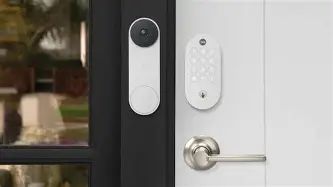
Overall, the Yale Matter lock represents a meaningful step forward for smart locks toward an ecosystem that simply works together. For users ready to invest a little time in a modern, interoperable smart home, it is a practical, well-rounded option that reduces friction without sacrificing the controls people expect from today’s connected door locks.