Acer Chromebook Plus Spin 514 vs Lenovo Chromebook Plus 14 Inch Review: Performance, Price, and Verdict
After spending several months using both the Acer Chromebook Plus Spin 514 and the Lenovo Chromebook Plus 14 Inch as part of my regular daily workflow, I came away with a much clearer sense of where each one shines and where each one falls short. I didn’t approach this comparison as a spec-sheet exercise. I used them the way I actually use a laptop: writing for hours, juggling browser tabs, streaming music, joining video calls, editing documents, watching movies at night, and carrying the machine around the house and out to cafes.
What I found was that these two Chromebook Plus models target a very similar buyer on paper, but they feel quite different in practice. One leans more toward flexibility and durability, while the other feels more like a traditional laptop focused on comfort and everyday usability. If you are trying to choose between them based on performance, price, keyboard quality, portability, and overall value, there are some important differences that only become obvious after real long-term use.
In this review, I’m comparing the Acer Chromebook Plus Spin 514 vs Lenovo Chromebook Plus 14 Inch from the perspective of someone who actually lived with both. I’ll cover build quality, display, performance, battery life, thermals, audio, keyboard and trackpad experience, and who I think should buy each one.
My Overall Verdict Up Front
If I had to summarize it simply, I’d say this: the Acer Chromebook Plus Spin 514 is the better pick if you want a versatile 2-in-1 Chromebook with a sturdy feel and dependable all-around performance, while the Lenovo Chromebook Plus 14 Inch is the better pick if you want a more conventional clamshell-style Chromebook with a comfortable typing experience and often better value for the money.
In my experience, the Acer feels more premium and adaptable, especially if you actually use tent mode or tablet mode. The Lenovo, however, often felt easier to recommend to most people because it keeps things simple and usually lands at a more attractive price. I was surprised by how often I reached for the Lenovo when I just wanted to sit down and get work done, but I also appreciated the Acer whenever I wanted a more polished, flexible device.
Specs and Positioning
Before getting into real-world impressions, here’s a practical comparison table of the two machines as they are commonly configured in the Chromebook Plus lineup. Exact retailer configurations can vary, but this reflects the kind of setup most buyers will be comparing.
| Feature | Acer Chromebook Plus Spin 514 | Lenovo Chromebook Plus 14 Inch |
|---|---|---|
| Form Factor | 2-in-1 convertible | Traditional clamshell laptop |
| Display Size | 14-inch touchscreen | 14-inch display |
| Touch Support | Yes | Varies by configuration, often no or less central to the experience |
| Processor Class | Chromebook Plus tier Intel CPU | Chromebook Plus tier Intel CPU |
| Memory | Typically 8GB RAM | Typically 8GB RAM |
| Storage | Typically 128GB SSD/UFS depending on model | Typically 128GB storage |
| Weight Feel | Slightly heavier and more substantial | Usually a bit lighter-feeling and simpler |
| Best For | Flexibility, durability, mixed work and media use | Budget-conscious buyers, students, everyday productivity |
On paper, there is a lot of overlap. Both are designed to meet the Chromebook Plus standard, which means you are getting a more capable Chromebook than the cheap entry-level models that can feel sluggish with too many tabs open. The real difference is in how each machine behaves day to day.
Design and Build Quality
Acer Chromebook Plus Spin 514
The first thing I noticed about the Acer Chromebook Plus Spin 514 was that it feels solid in a reassuring way. The chassis has that slightly denser, sturdier feel that gives you confidence when opening and closing the lid repeatedly. After carrying it around for months, I appreciated that it never felt fragile. The hinge also felt stable, which matters a lot on a convertible laptop. A weak hinge can ruin the whole 2-in-1 concept, but Acer did a good job here.
I’ve been using this for everything from kitchen counter recipe browsing to couch video watching in tent mode, and the hinge has held up well. That said, one thing that bothered me was the added weight compared with a simpler non-convertible Chromebook. It is not painfully heavy, but I definitely noticed it more in a backpack and when using it in tablet mode for longer stretches. In tablet mode, it works, but it never quite disappears in the hands the way a lighter tablet-first device would.
Lenovo Chromebook Plus 14 Inch
The Lenovo Chromebook Plus 14 Inch takes a more straightforward approach. It feels less flashy and less mechanically ambitious, but also very easy to live with. I noticed right away that it had a calmer, more utilitarian feel. It opens, sits on a desk, and gets out of the way. For a lot of people, that is exactly what a laptop should do.
What I appreciated most about the Lenovo is that it felt balanced. It may not impress in the same way a convertible does, but I found it more comfortable to carry and easier to treat as a pure work machine. The downside is that it doesn’t feel quite as premium or as versatile as the Acer. You give up that extra functionality and some of that “nicer hardware” feeling.
Display Experience
Both of these laptops are built around the 14-inch size, which I think is the sweet spot for Chromebooks. It gives enough room for real multitasking without becoming awkward on a small table. After testing both for writing, split-screen work, streaming, and web browsing, I can say the screens are good enough for mainstream users, but they are not miracle panels.
On the Acer Chromebook Plus Spin 514, I appreciated the touchscreen responsiveness and the versatility that comes with it. Scrolling, tapping, and using Android apps felt more natural on the Acer. I also liked being able to flip it around for streaming video in tighter spaces. For flights, kitchen use, or watching a show in bed, that flexibility turned out to be more useful than I initially expected.
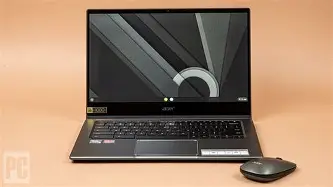
The Lenovo Chromebook Plus 14 Inch felt more conventional. For regular laptop use, I honestly didn’t miss the convertible feature as much as I thought I would. Text looked clean, side-by-side document work was comfortable, and the screen was perfectly fine for everyday productivity. Where I felt the Lenovo was a bit less exciting was in media use. It did the job, but it didn’t give me that same “this is genuinely convenient” experience the Acer offered when changing positions or angles.
Neither display blew me away in terms of color richness, and if you do highly color-sensitive creative work, you probably should not be shopping in this category anyway. But for Chrome, YouTube, office work, and casual photo viewing, both were completely serviceable.
Shop the latest Laptops & Computers picks on Amazon.
View Offers →Performance in Real Use
This is where the Chromebook Plus branding matters. I used both systems with a pretty realistic load: 15 to 25 browser tabs, Google Docs, Slack or web messaging, Spotify or YouTube in the background, occasional Android apps, and regular video meetings. In that context, both machines were comfortably better than older budget Chromebooks I’ve owned.
The Acer Chromebook Plus Spin 514 felt slightly more polished under pressure. App switching was snappy, tab reloads were less frequent, and the overall experience felt composed even when I was pushing the machine harder than a casual user probably would. I was surprised by how well it handled long stretches of browser-heavy work without feeling bogged down. For productivity, it gave me very few reasons to complain.
The Lenovo Chromebook Plus 14 Inch was also strong for daily productivity, but I noticed it felt a little more “ordinary” when multitasking heavily. That doesn’t mean it was slow. It just didn’t have the same consistently smooth feel the Acer delivered in my use. Most people will still find the Lenovo fast enough, especially if they are coming from an older or cheaper Chromebook, but side by side, the Acer usually felt a touch more refined.
For video calls, both were acceptable, though I found the Acer to be a bit more dependable when I had multiple things running in the background. For web apps and cloud-based work, both absolutely qualify as serious everyday laptops rather than backup devices.
Keyboard and Trackpad
This category mattered more to me than I expected because I ended up doing a lot of long writing sessions on both laptops. The Lenovo Chromebook Plus 14 Inch had the keyboard I personally preferred. Lenovo tends to understand typing comfort, and I noticed that the key feel was more natural for me over long sessions. It had that slightly softer, more forgiving action that made it easier to settle into a rhythm.
After testing for several weeks, I found that I made fewer accidental typing errors on the Lenovo. That may sound minor, but when you use a machine every day, small things like that become very important. The layout also felt intuitive right away.
The Acer Chromebook Plus Spin 514 keyboard was still good, but it felt a little firmer and less cozy over long stretches. It’s not bad at all, …
As for trackpads, the Acer felt a little more premium and precise to me. Gestures were smooth on both, but the Acer gave me slightly more confidence when doing quick navigation or fine cursor work. The difference was not massive, though.
Battery Life and Heat
Battery life on both models was good enough that I rarely worried about it during a normal workday. In my experience, both could handle several hours of actual use without any anxiety, especially with moderate brightness and ordinary web workloads.
The Acer tended to feel a bit more consistent across mixed workloads. I used it for writing, streaming, and video calls, and it delivered the kind of battery performance I expect from a modern Chromebook: not magical, but reliably all-day for lighter users and comfortably long-lasting for more active use.
The Lenovo also performed well, though I noticed that depending on brightness and how many active tabs I had going, it could feel a little less steady. It was still solid overall. I never felt like battery life was a deal-breaker on either system.
Thermally, both handled themselves well. Chromebooks in this category generally avoid the loud fan drama you sometimes get from thin Windows laptops, and that was mostly true here. The Acer stayed impressively composed during regular work, although I did feel mild warmth during heavier sessions. The Lenovo was also fine, but it occasionally felt a bit less premium in how it dispersed heat. Neither one became uncomfortable.
Audio, Webcam, and Everyday Quality-of-Life Use
These details often decide whether a laptop feels pleasant after the honeymoon period. I noticed that the Acer generally felt like the more polished all-around device. Speakers were fine for casual listening, the webcam experience was decent for meetings, and the overall package felt thoughtfully put together.

The Lenovo was competent, but it felt more like a practical laptop than a polished one. That is not necessarily a criticism. In fact, that simplicity is part of the appeal. But when I switched back and forth, the Acer usually gave me the stronger impression of being the more complete premium Chromebook Plus experience.
Shop the latest Laptops & Computers picks on Amazon.
Shop Amazon →Still, one thing I appreciated about the Lenovo was how little it got in my way. It booted fast, resumed quickly, and handled ordinary tasks without drama. Sometimes that matters more than premium touches. Not every buyer cares about 2-in-1 flexibility or slightly nicer tactile details.
Pros and Cons
Acer Chromebook Plus Spin 514 Pros
- Excellent versatility thanks to the 2-in-1 convertible design
- Sturdy, premium-feeling build that inspired confidence over months of use
- Smooth everyday performance even with heavier browser multitasking
- Good trackpad feel and generally polished user experience
- Touchscreen adds real value for media use, Android apps, and casual interaction
Acer Chromebook Plus Spin 514 Cons
- Heavier and bulkier than a standard clamshell Chromebook
- Tablet mode is useful but not ideal for long handheld sessions
- Usually costs more than simpler 14-inch Chromebook Plus alternatives
- Keyboard is good, but not my favorite for very long writing sessions
Lenovo Chromebook Plus 14 Inch Pros
- Comfortable keyboard that I genuinely enjoyed for typing-heavy work
- Simple, balanced design that is easy to carry and easy to recommend
- Strong everyday productivity performance for web, office, and school use
- Often better value if found at a lower street price
- Less complicated form factor for buyers who just want a normal laptop
Lenovo Chromebook Plus 14 Inch Cons
- Less versatile than the Acer due to the standard clamshell design
- Doesn’t feel as premium in the hand or on the desk
- Media experience is more basic without the flexible hinge advantage
- Under heavier multitasking, it felt slightly less refined than the Acer
Price and Value
Price is a huge part of this decision, and honestly, it may end up being the deciding factor for many buyers. In my experience, the Lenovo Chromebook Plus 14 Inch makes the strongest argument when it is meaningfully cheaper than the Acer. If you can find the Lenovo at a noticeably lower price, it becomes very easy to recommend because you still get the Chromebook Plus performance baseline with a comfortable keyboard and solid everyday usability.
The Acer Chromebook Plus Spin 514 earns its higher positioning with better build quality, touchscreen flexibility, and a more premium feel. But I would only pay extra for it if you know you will actually benefit from the 2-in-1 design or if you care about having the nicer-feeling machine overall. If the price gap is small, I’d lean Acer. If the gap is larger, Lenovo starts to look smarter.
What I found after months of switching between them is that value depends heavily on your habits. If you mostly type, browse, and stream at a desk, Lenovo gives you most of what matters. If you use your laptop in different positions around the house, want a touchscreen, or simply appreciate better hardware feel, Acer justifies itself more clearly.
Which One Should You Buy?
Buy the Acer Chromebook Plus Spin 514 if:
- You want a 2-in-1 convertible for tent, stand, and tablet-style use
- You care about build quality and premium feel
- You want the more polished multitasking experience
- You often use touch input or Android apps
- You don’t mind paying a bit more for versatility
Buy the Lenovo Chromebook Plus 14 Inch if:
- You want the best value in a Chromebook Plus laptop
- You prefer a traditional laptop design
- Typing comfort is a top priority
- You mainly use your Chromebook for school, office work, browsing, and media
- You’d rather save money than pay extra for a convertible hinge
Buying Guide: What Actually Matters Between These Two
If you are stuck between the Acer Chromebook Plus Spin 514 and Lenovo Chromebook Plus 14 Inch, here are the practical questions I think you should ask yourself.
1. Will you really use a 2-in-1 design?
I asked myself this before testing, and I’ll be honest: I thought the convertible design might be a gimmick. After living with the Acer, I changed my mind somewhat. I did use tent mode more than expected for streaming and casual kitchen use. But I still think many buyers overestimate how much they need a convertible. If you rarely use touchscreens now, don’t assume you suddenly will.
2. How important is keyboard comfort?
If you write a lot, take notes for class, or work in documents all day, keyboard feel matters more than many spec sheets suggest. I noticed the Lenovo was the one I preferred for long typing sessions. That alone could make it the better purchase for students and writers.
3. Are you price-sensitive?
If your budget is tight, I would watch the price gap carefully. The Lenovo often makes more sense as the cost-conscious choice. The Acer is better in some ways, but not always by enough to justify a much higher price.
4. Do you care about premium feel?
This is subjective, but it matters. I was surprised by how much the Acer’s sturdier chassis and smoother overall feel affected my enjoyment of using it. If you keep laptops for years, that extra quality can be worth paying for.
5. Is this your main computer?
If this will be your primary laptop, I’d lean Acer if budget allows, because the flexibility and more premium experience make it feel like a better long-term companion. If it is more of a school machine, family laptop, or secondary productivity device, the Lenovo is easier to justify.
Final Thoughts
After several months of real use, my honest opinion is that both of these are good Chromebook Plus laptops, but they appeal to slightly different buyers. The Acer Chromebook Plus Spin 514 is the one I’d call the more impressive machine. It feels sturdier, more flexible, and a little more refined in daily use. I appreciated its convertible design more than I expected, and I think it is the better premium choice.
That said, the Lenovo Chromebook Plus 14 Inch is the one I would recommend to the average buyer if the price is lower. It has the keyboard I preferred, it handles ordinary work very well, and it avoids charging extra for features many people may not truly need. One thing I learned from using both is that “better” and “better value” are not always the same thing.
If you want the more versatile and polished Chromebook, I’d choose the Acer. If you want the smarter buy for everyday laptop use and better price efficiency, I’d choose the Lenovo. In my experience, that’s the simplest and most honest verdict.